The Ghost in the Shell is a true love letter to cyberpunk anime fans
Few anime carry the weight of Ghost in the Shell. Since Masamune Shirow’s manga first appeared in 1989, the franchise has shaped decades of science fiction storytelling, inspiring filmmakers, game creators, and anime directors alike. From the landmark 1995 film by Mamaru Oshii to Stand Alone Complex and even the more recent series, every new installment arrives with its own intriguing perspective on what the Ghost in the Shell should look like.
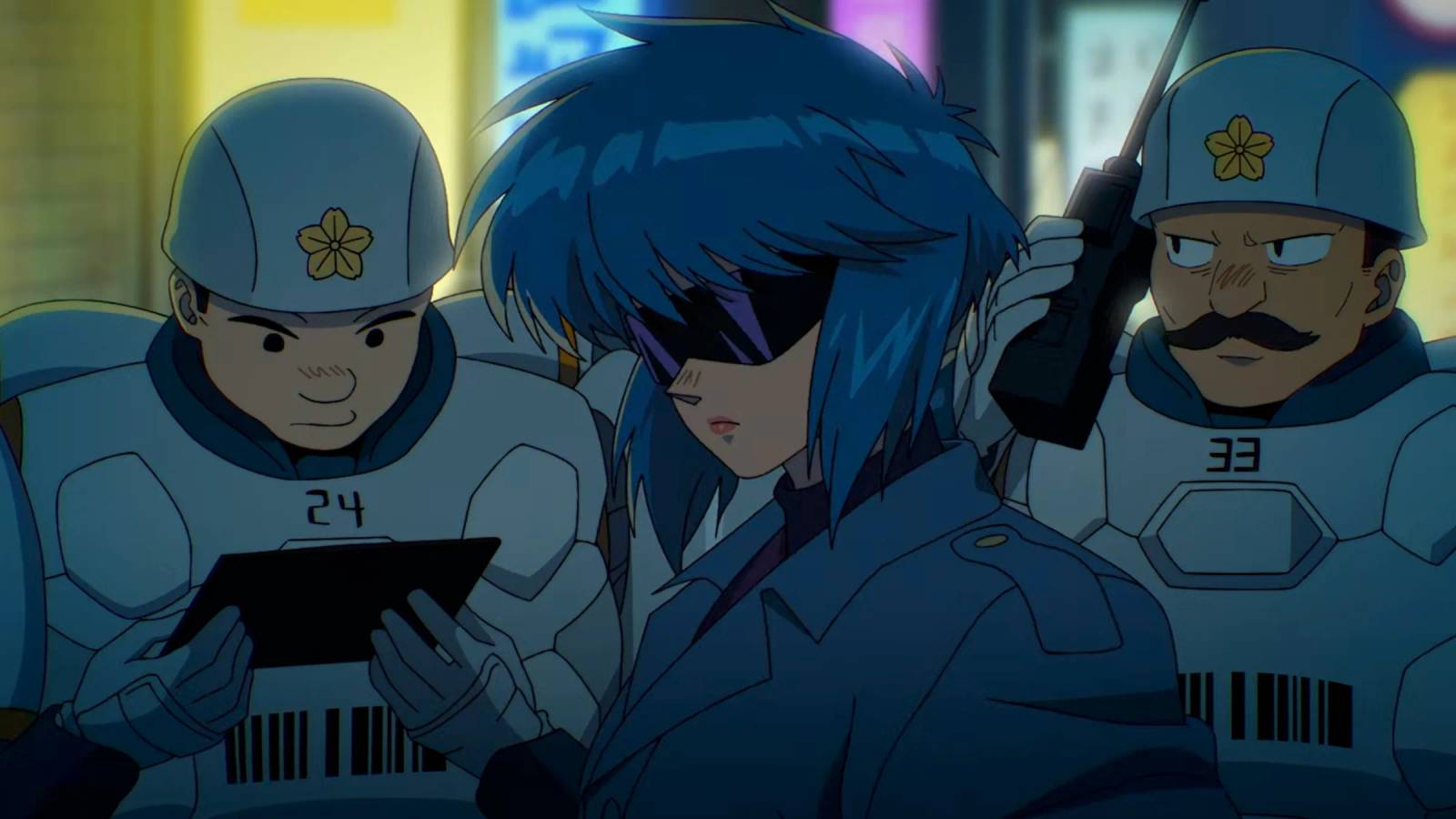
Science Saru asks: Why not a 100% adaptation of the manga with a dash of what made every other iteration so impactful? Premiering its first two episodes at Anime Expo, The Ghost in the Shell leaves little room for criticism. It is, by all accounts, an utter masterpiece, giving fans one of the most relatable takes on Motoko Kusanagi ever put to screen, elevating every scene with a jazzy, electronic score that evokes the best parts of Innocence and Stand Alone Complex. By no means does the absence of the dark and psychological elements of Oshii’s classic detract from the experience. In fact, it’s elevated by the more grounded storytelling at the heart of the series.
Major Motoko Kusanagi of Section 9 is no longer the introspective, firm, and cold leader we see in other anime projects. She’s far more spunky, funny, and cute. She isn’t afraid to crack jokes, or tell people how she feels. She’ll even hack your ghost and make you punch yourself, and you might accidentally catch her in a digital erotic scene if you’re not too careful. Kusanagi feels far more relatable because of it; she doesn’t feel attached to Public Security like the past. She’s her own boss-lady with a heart of gold, who loves and trusts her team, and rocks the ’80s apparel with a fierce elegance.
Director Mokochan shines like never before, leveraging interesting overhead shots, explosive bouts of color, and sequences seen through varied lenses, like the Fuchikomas and brain dives, showcasing the world of The Ghost in the Shell from almost every angle. It’s primed for multiple watches so you don’t miss every mesmerizing frame. Plus, the use of spectral lighting in certain scenes, where the sun’s rays shine through a nearby window to bathe characters in a spellbinding glow, was a nice touch.
The series’ enduring fascination with identity, technology, and the boundaries between human and machine is still put front and center. The episode immediately establishes that The Ghost in the Shell is not simply a nostalgia play. The visual style feels distinct from previous adaptations, embracing a cleaner, more contemporary look while still preserving the dense cyberpunk atmosphere that defines the property. Fans will notice a slew of similar scenes from the movies and shows that came before, but they play out now in very different ways. It’s not merely a love letter to the manga, but to fans of Ghost in the Shell on the whole.
The series remains just as interested in surveillance, consciousness, and the ways advanced networks reshape everyday life, themes that feel even more relevant in 2026 than they did decades ago. But it uses those elements in far more interesting ways that make the world feel vibrant and realistic, as opposed to dark and brooding.
The Ghost in the Shell succeeds by making one of the most familiar cyberpunk properties feel fresh and fun nearly four decades after its inception. If its first two episodes are proof of the elevated qualities on display throughout the entire season, then this might well be the best adaption yet.
The Ghost in the Shell premieres on Prime Video starting July 7.
PakarPBN
A Private Blog Network (PBN) is a collection of websites that are controlled by a single individual or organization and used primarily to build backlinks to a “money site” in order to influence its ranking in search engines such as Google. The core idea behind a PBN is based on the importance of backlinks in Google’s ranking algorithm. Since Google views backlinks as signals of authority and trust, some website owners attempt to artificially create these signals through a controlled network of sites.
In a typical PBN setup, the owner acquires expired or aged domains that already have existing authority, backlinks, and history. These domains are rebuilt with new content and hosted separately, often using different IP addresses, hosting providers, themes, and ownership details to make them appear unrelated. Within the content published on these sites, links are strategically placed that point to the main website the owner wants to rank higher. By doing this, the owner attempts to pass link equity (also known as “link juice”) from the PBN sites to the target website.
The purpose of a PBN is to give the impression that the target website is naturally earning links from multiple independent sources. If done effectively, this can temporarily improve keyword rankings, increase organic visibility, and drive more traffic from search results.